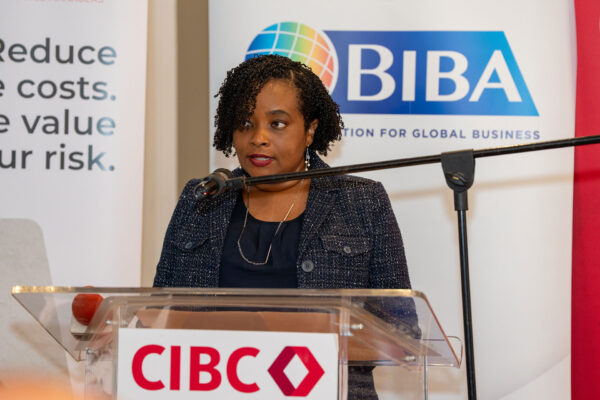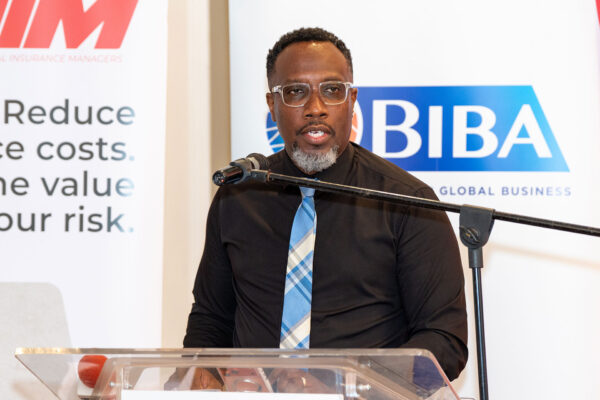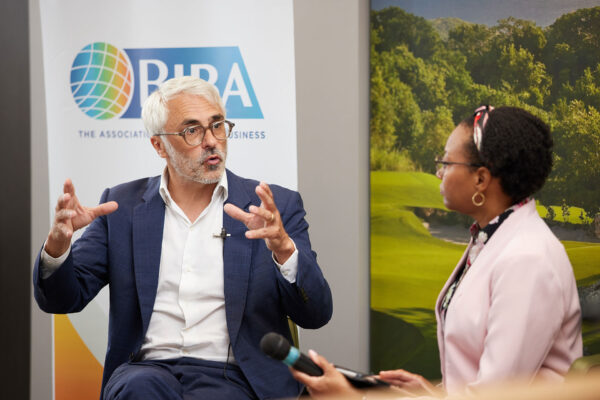
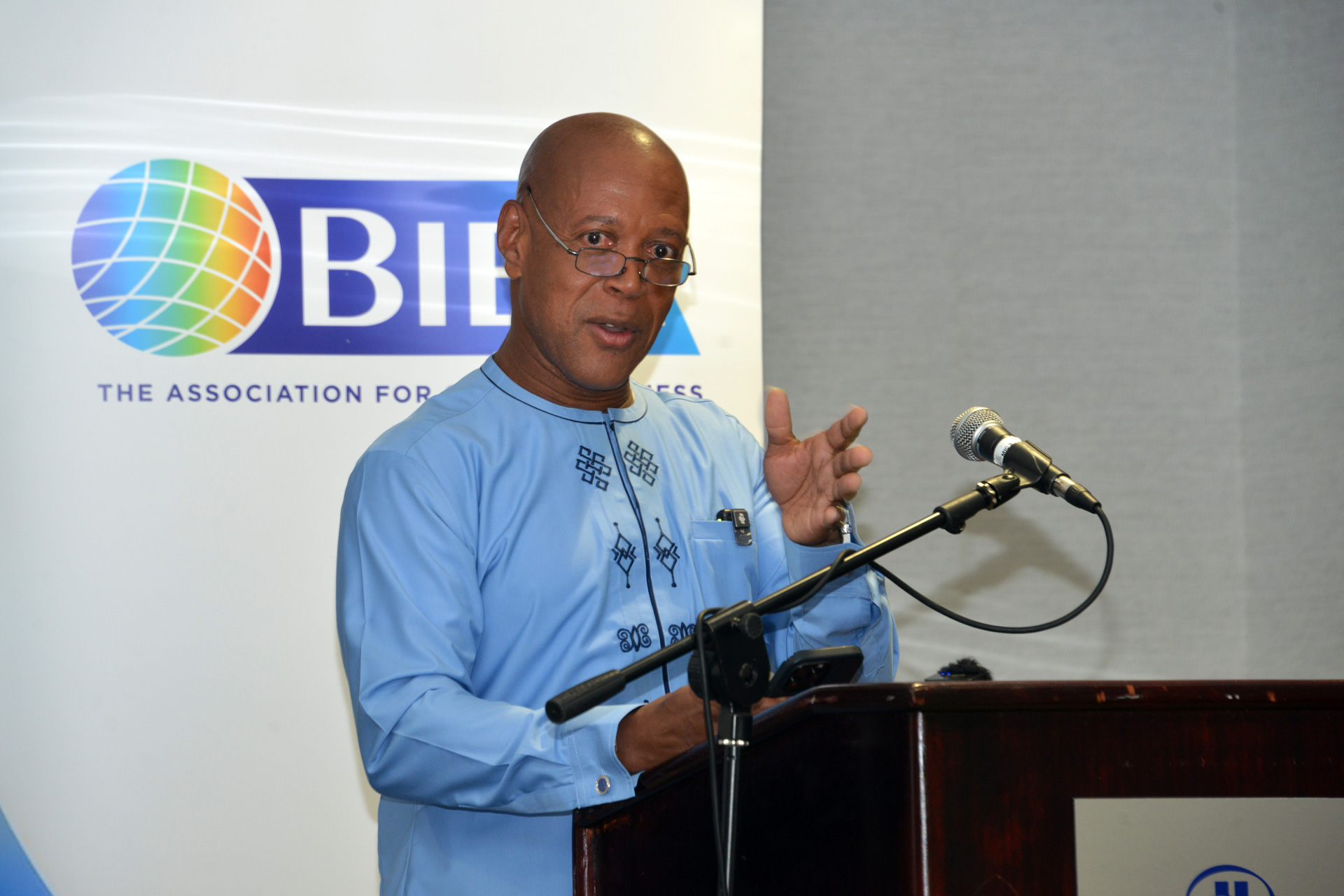
Governor of the Central Bank of Barbados, Dr. Kevin Greenidge, has challenged the island’s global business sector to play a larger role in strengthening Barbados’ economic resilience by expanding opportunities to earn foreign exchange while reducing the leakage of vital foreign currency.
Delivering the keynote address at the BIBA 2026 Economic Outlook Luncheon Seminar, hosted by BIBA, the Association for Global Business, at the Hilton Barbados Resort on March 5, Dr. Greenidge noted that Barbados has the potential to achieve economic growth of up to five per cent, and said he was particularly encouraged by the broad-based nature of the expansion, which was reflected across all sectors.
Referring to the island’s economic performance in 2025, Greenidge pointed out that real economic growth reached 2.7 per cent, driven by record tourism arrivals and investment. However, he warned that strong tourism arrivals and investment alone would not guarantee sustainable growth for Barbados.
Turning specifically to the global business sector, Greenidge noted that as of December, government had issued 2,524 foreign currency permits, an increase of 1.3 per cent over 2024 driven by the registration of 34 new permit registrations.
He also highlighted a notable shift in the sector’s labour dynamics.
“The average salary has increased by 2.2 percent. However, the overall employment declined by roughly 0.1 percent. What that tells me, or what it suggests . . . is that the sector is gradually moving up the value chain,” he stated.
“In other words, we’re seeing a shift towards high-value activities that rely more on specialised operations and specialised and professional services,” the governor added.
Greenidge said this evolution underscores the need for the global business sector to become more closely integrated with the wider Barbadian economy, creating stronger linkages with industries such as professional services, technology and investment.
He also underscored the importance of better data collection to support policymaking.
“We can’t plan without information. At the moment, the data we have on the sector is still not as detailed as we would like it to be. If we want to design policies that support the sector’s evolution, we must have a clearer picture of what firms are doing, where the value is being created, where new opportunities are emerging.”
Looking ahead, Greenidge stressed that building economic resilience must remain a priority as Barbados navigates a volatile and uncertain global environment. He pointed to the importance of maintaining strong economic buffers to protect the country from potential external shocks.
“Going into 2026, we have to focus on preserving what matters most. Protecting reserves . . . strengthening confidence and maintaining confidence, continuing to support the strong fiscal position; and keeping our financial system resilient in this global environment,” the Governor asserted.