Barbados is poised to strengthen its appeal as an international business destination following Spain’s decision to remove the island from its list of non-cooperative jurisdictions, a move that a senior government official says eliminates a major obstacle to investment and enhances the country’s international standing.
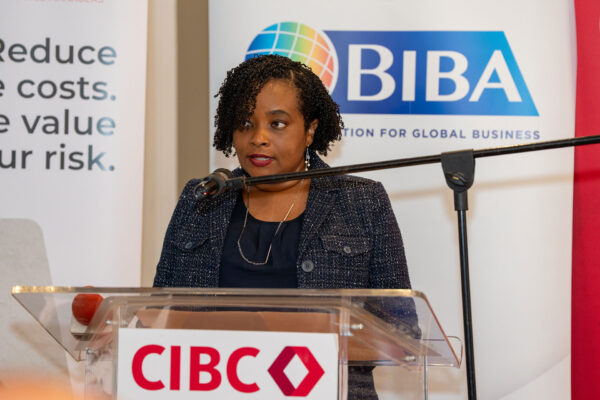
Speaking during a webinar, Off Spain’s Blacklist: What It Means for Barbados, hosted by BIBA, the Association for Global Business, Acting Director of the Business Compliance Division in the Ministry of Energy and Business Development, Sangene Watkins-Diagne, described the June 28, 2026, decision as “a significant milestone for Barbados and for all those with an interest in our international business and investment sector.”
She explained that Barbados was first placed on Spain’s blacklist in 1991 before being removed in 2011 after signing a double taxation agreement. The country was relisted in February 2023 after Spain replaced its tax haven list with a broader list of non-cooperative jurisdictions.
Watkins-Diagne stressed that Barbados’ inclusion was not due to concerns about transparency or harmful tax practices.
“Barbados’ inclusion was not based on concerns regarding transparency, exchange of information or harmful tax practises,” she said. “Rather, it was linked to Spain’s assessment that Barbados’ tax system fell within its definition of a low-tax jurisdiction.”
She said officials from the former International Business Unit and the Barbados Revenue Authority (BRA) engaged Spanish authorities through technical discussions and diplomatic channels to demonstrate that Barbados’ tax framework met international standards.
A key breakthrough came through Barbados’ work with the Organisation for Economic Co-operation and Development’s (OECD) Forum on Harmful Tax Practices. Following reforms to its corporate tax system, Barbados was reclassified from a non-nominal tax jurisdiction to a taxing jurisdiction with preferential regimes, addressing the issue that had kept the country on Spain’s blacklist.
“Today’s outcome, therefore, represents more than the removal of a label,” Watkins-Diagne said. “It represents recognition of Barbados’ commitment to international standards, transparency, and responsible tax governance.”
She noted that Barbados’ presence on the blacklist had damaged investor confidence, not only because of potential tax consequences but also because it signalled increased risk.
“Industry participants consistently communicated that, beyond the technical tax consequences, the listing generated a risk classification signal that affected perceptions of Barbados as a jurisdiction for investment and expansion,” she said.
With Barbados now removed from the list, investors can once again assess the jurisdiction on its merits, she added.
Watkins-Diagne highlighted Barbados’ stable political and legal environment, extensive treaty network, strong regulatory framework and sophisticated professional services sector as competitive advantages. She also described the island as “a stable, treaty-connected jurisdiction located at the gateway of Latin America.”
“With that obstacle now removed, there is renewed scope for Barbados to deepen commercial relationships and support legitimate cross-border investment and business activity,” she said.
While welcoming the decision, Watkins-Diagne said Barbados must continue strengthening its reputation by maintaining high standards of transparency and international cooperation.
“These principles are not simply obligations, they are fundamental to our competitiveness and credibility,” she said.
She also announced that Barbados is establishing a beneficial ownership register to further strengthen its transparency framework.
The webinar, she said, was designed to help businesses and advisers understand the practical implications of Spain’s decision, including the opportunities that have reopened and how Barbados can position itself within the evolving international tax landscape.
Watkins-Diagne said the country’s removal from Spain’s blacklist should be viewed as an opportunity to build on Barbados’ reputation as a credible and competitive international business centre.
Produced by Geralyn Edward for BIBA, the Association for Global Business