
The decision by Spain to remove Barbados from its blacklist of non-cooperative jurisdictions for tax purposes has unlocked an enormous gateway for the island to expand its global business footprint, not only in Spain but also in the largely untapped Latin American market.
Miguel Tomé de Medeiros, an international tax expert who focuses on cross-border corporate taxation, transfer pricing and tax controversy across the Caribbean and Latin America, has described the move by the Spanish authorities as a “game changer” for Barbados.
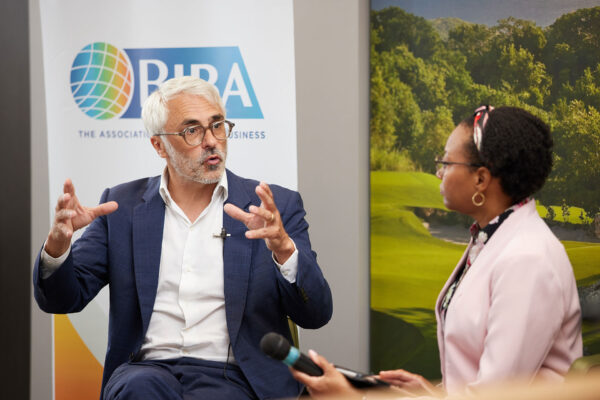
Speaking at a webinar hosted by BIBA, the Association for Global Business, titled Off Spain’s Blacklist: What It Means for Barbados, Tomé de Medeiros explained that Spain’s blacklisting had created an extremely hostile compliance environment for local and internationally based companies operating from Barbados, causing them to face excessively high taxes on dividends, an annual penalty on Barbados companies holding real estate in the European jurisdiction, among other hurdles to doing business.
As Tomé de Medeiros remarked, the mindset of the Spanish authorities towards blacklisted countries was, “You are considered guilty from the beginning and then you have to prove that you are not doing anything wrong. . . . So if you have something connected with Barbados, you are guilty and then you have to prove your [innocence].”
However, the situation changed dramatically for the island on June 28, when Spain removed Barbados from the blacklist.
The international tax expert highlighted the boost to Barbados’ risk profile in the eyes of potential foreign investors.
In addition, Tomé de Medeiros pointed to the participation exemption regime, a tax rule that allows a company to receive certain income from its investments in other companies without paying tax, or by paying reduced tax, on that income.
Spanish companies, for example, with operations in Barbados will now benefit from a 95 percent general exemption on dividends from the island.
“This is actually a big benefit because . . . with the new listing, Barbados companies will have full access to the participation exemption regime. . . . and capital gains exemptions are also available now,” he noted.
“The other thing, which is not very usually known, is that Spain has this three per cent annual real estate tax, which was like a penalty for Barbados companies holding real estate in Spain. This no longer applies and it levels the playfield . . . . Of course, you know when it comes to tax events, the Spaniards can be very demanding and aggressive,” he observed.
“You are treated as a normal company for real estate purposes. Your service fees are deductible. And of course, you have to obey the standard treaty documentation.”
Since Barbados’ removal from the Spanish blacklist, Tomé de Medeiros asserted the island has become “more appealing”, with one of the greatest advantages stemming from the tax treaty between Barbados and Spain.
“The treaty becomes unencumbered again. Dividends are subject to zero per cent if you have more than 15 percent holding, five per cent otherwise, zero per cent withholding on interest, and also royalties.
“Why is this so important? Due to the proximity of Barbados to Latin American countries . . . from my experience, Nicaragua, Guatemala, especially in Central America . . . they only have one double tax treaty, and usually this tax treaty is with Spain. This is something that companies can take advantage of, as long as there is substance,” he urged.
Tomé de Medeiros cautioned, however, that European Union jurisdictions such as Portugal, as well as countries including Colombia and Brazil, may still maintain Barbados on their adverse lists despite the decision by Spain and notwithstanding the island’s standing with the European Commission and the OECD.
At the same time, he reminded Barbados that continued vigilance and enforcement of compliance rules would be essential to maintaining its current status.
“The treaty is a door, not a loophole; you still have to have substance, and there are many cases where all the official arrangements were denied. You cannot do treaty shopping, and I know that Barbados also has experience with the substance rules.
“The old times where you have a company with just a letterbox; this, of course, no longer applies. In order to get access to those benefits, there is a need to have real substance.”
He also urged webinar participants to “pay really close attention to the fact that Spain, EU, OECD overlap sometimes and they have separate lists, so durability isn’t automatic.”
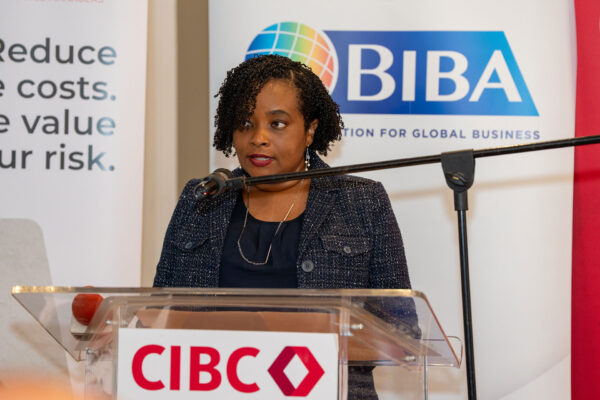
Meanwhile, Sangene Watkins-Diagne, Acting Director of the Business Compliance Division, formerly the International Business Unit of the Ministry of Energy and Business Development, highlighted Barbados’ ongoing efforts to establish a beneficial ownership register to further strengthen the country’s transparency framework, underscoring Government’s commitment to ensuring the island remains an attractive business domicile.
By Geralyn Edward for BIBA, the Association for Global Business